
Understanding and Addressing Criminal Thinking
$15.00 — 1.5 Credits
Understanding and Addressing Criminal Thinking
Description
This pre-recorded SAMHSA webinar was designed to help mental health professionals understand and address criminal thinking, an essential component of treating people with substance use and co-occurring disorders in the Criminal Justice System.
The presenters are: Michael Chaple, PhD and Joseph Madonia, LCSW-R, CASAC.
This presentation was recorded September 1, 2020.
Format: Asynchronous, distance learning. Non-interactive. Recorded audio/video with transcript.
This content has been sourced with approval from SAMHSA.
NAADAC Online CE Completion limits: There is a limit of 8 hours (8 CE) of credit for online courses within a 24-hour period.
Click here to view our policy on Fees, Refunds, and Cancellations
The course will be available in your account immediately after purchase. The Course Completion Certificate and Letter of Completion will be immediately available in your account upon successful completion of the course post-test (a score of 80% or higher) and completion of the course evaluation. You will have unlimited attempts to pass the post-test.
Do you have questions about this course? Do you require accessibility accommodations? Please visit our FAQ page or Contact Us and we'll be happy to help.
Course Details
- Credits
- 1.5
- Course Format
- Recorded video, asynchronous, distance-learning, non-interactive, includes transcript.
- Target Audience
- Psychologists, Counselors, Marriage and Family Therapists, Addiction Counselors, Social Workers, Nurses
- CE Credit Type / Category
- Clinical, Counseling
- Course Level
- Beginner
- Conflict of Interest
- None reported
- Publication Date
- July 12, 2022
- Last Modified
- April 19, 2026
Learning Objectives
- Contrast the different theories that explain criminal behavior
- List the three C's that comprise criminal thinking patterns
- Summarize 3 Cognitive Behavioral Evidence-Based Treatment Programs
- Explain strategies for addressing criminal thinking
CE Approvals
At Health has been an approved continuing education provider for mental health professionals since 2001 — more than two decades of supporting psychologists, counselors, social workers, marriage and family therapists, and addiction professionals through online, self-paced CE.

American Psychological Association (APA)
At Health, LLC is approved by the American Psychological Association to sponsor continuing education for psychologists. At Health, LLC maintains responsibility for this program and its content.

National Board for Certified Counselors (NBCC)
At Health, LLC has been approved by NBCC as an Approved Continuing Education Provider, ACEP No. 6949. Programs that do not qualify for NBCC credit are clearly identified. At Health, LLC is solely responsible for all aspects of the programs.

NAADAC – The Association for Addiction Professionals
Athealth.com is approved as a continuing education provider by the National Association of Alcoholism and Drug Abuse Counselors, the Association for Addiction Professionals. #148460.

Association of Social Work Boards (ASWB)
At Health, LLC, Provider #1707, is approved as an ACE provider to offer social work continuing education by the Association of Social Work Boards (ASWB) Approved Continuing Education (ACE) program. Regulatory boards are the final authority on courses accepted for continuing education credit. ACE provider approval period: 5/3/2023–5/3/2026.
State-Specific Approvals
It is At Health’s understanding that these programs meet the criteria of an approved continuing education program for social work in Arkansas. State and provincial regulatory boards have the final authority to determine whether an individual course may be accepted for continuing education credit.
It is At Health’s understanding that these programs meet the criteria of an approved continuing education program for social workers, professional counselors, marriage and family therapists, master’s level psychologists, licensed clinical psychotherapists, and alcohol and other drug abuse counselors in Kansas. State and provincial regulatory boards have the final authority to determine whether an individual course may be accepted for continuing education credit.
It is At Health’s understanding that these programs meet the criteria of an approved continuing education program for mental health practice and for social work in Nebraska. State and provincial regulatory boards have the final authority to determine whether an individual course may be accepted for continuing education credit.
It is At Health’s understanding that these programs meet the criteria of an approved continuing education program for psychologists, pastoral psychotherapists, clinical social workers, clinical mental health counselors, marriage and family therapists, and alcohol and drug abuse counselors in New Hampshire. State and provincial regulatory boards have the final authority to determine whether an individual course may be accepted for continuing education credit.
It is At Health’s understanding that these programs meet the criteria of an approved continuing education program for social workers, professional counselors, marital and family therapists, and clinical pastoral therapists in Tennessee. State and provincial regulatory boards have the final authority to determine whether an individual course may be accepted for continuing education credit.
Other jurisdictions may accept trainings offered by At Health, LLC for your continuing education requirements. Restrictions may apply. State and provincial regulatory boards have the final authority to determine whether an individual course may be accepted for continuing education credit.
Page last modified or reviewed by athealth.com on .
Syllabus 3 lessons
- 🖹 [B9504-V22 ] Video: Understanding and Addressing Criminal Thinking
- 🖹 [B9504-V22 ] Transcript
- 🖹 [B9504-V22 ] Linked materials, References, and Citations
Author Bio
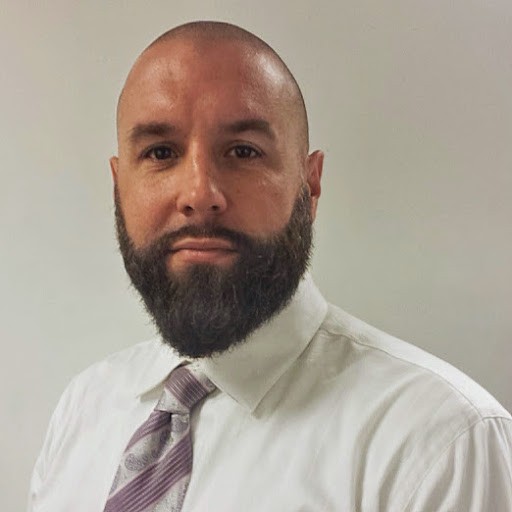
Joseph R. Madonia, LCSW-R, CASAC

Is a Licensed Clinical Social Worker and Addiction Specialist with over 25 years of experience in the field. Through a cognitive behavioral treatment approach, he provides his patients with a safe, trusting and comfortable environment that allows them the space to reflect, process and strategize ways to enhance their lives to live to their fullest potential.
He currently serves on the faculty of the NYU Graduate School of Social Work as a Clinical Professor and Advisor, and also provides clinical supervision to those clinicians seeking N.J./N.Y.S. licensure. He also works very closely with the N.J. and N.Y.S. court system to assist those clients who are justice involved.
For the past 15 years He has served as the Director for one of the leading Drug and Mental Health courts in the Nation. He also developed, designed and operated the first DWI, Veterans and Co-Occurring Mental Health treatment courts in Brooklyn NY.
He is a graduate of New York University and a Licensed Clinical Social Worker. He holds several degrees and certifications including Credentialed Alcohol and Substance Abuse Counselor and Forensic Mental Health Counselor and has over 27 years experience working with the Forensic and Co-Occurring Disorders populations.
He conducts numerous professional development trainings for practicing clinicians throughout the United States and maintains a private psychotherapy practice in Wall Township N.J. and the Financial District in New York City, where he treats adolescents and young adults with substance abuse and mental health disorders.
Instructors
Joseph R. Madonia, LCSW-R, CASAC
Michael J. Chaple, PhD
Ratings
Reviews 30
30 reviews for Understanding and Addressing Criminal Thinking
You must be logged in to post a review.
System Requirements
To access and complete this course, your device must meet the following minimum requirements:
- Browser: A modern web browser (Google Chrome, Mozilla Firefox, Microsoft Edge, or Apple Safari — current or one version prior). Internet Explorer is not supported.
- JavaScript: JavaScript must be enabled in your browser settings to navigate lessons, take quizzes, and access course materials.
- PDF Viewer: A PDF viewer is required to open course handouts, transcripts, and certificates. Most browsers include a built-in PDF viewer; alternatively, Adobe Acrobat Reader (free) can be used.
- Cookies: Cookies must be enabled to maintain your login session and save your course progress.
- Internet Connection: A stable internet connection is required. Video and audio courses may require higher bandwidth for smooth playback.
If you experience technical difficulties, please contact our support team for assistance.
Belinda (verified owner) –
Carol (verified owner) –
Paula (verified owner) –
Lorena (verified owner) –
Lori (verified owner) –
Danielle (verified owner) –
Lori (verified owner) –
John Wagner (verified owner) –
I rated this course 4 out of 5 stars.
Michelle Ruch (verified owner) –
1hour and 45mins
Angelique Haas (verified owner) –
About 2 hours.